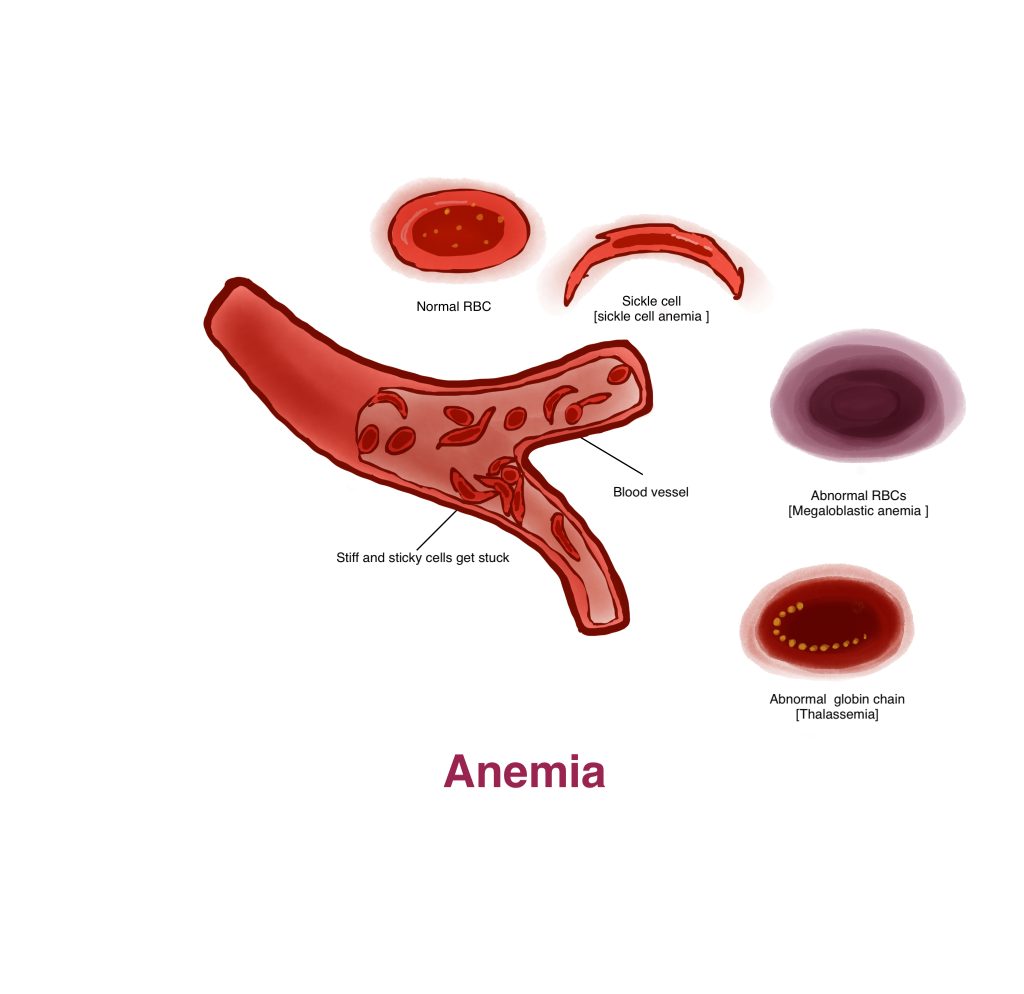
Anemia

Types of Anemia

There are different types of anemia, each with different causes:

  • Iron-deficiency anemia: The most common type, caused by a lack of iron in the body, which is needed to make hemoglobin (the protein that carries oxygen).
  • Vitamin-deficiency anemia: Caused by a lack of folate or vitamin B12, which are essential for red blood cell production.
  • Chronic disease anemia: Often occurs in people with chronic illnesses like kidney disease or inflammatory conditions, where the body’s ability to produce red blood cells is reduced.
  • Aplastic anemia: A rare but serious form where the bone marrow doesn’t make enough blood cells.
  • Hemolytic anemia: Occurs when red blood cells are destroyed too quickly.
  • Sickle Cell Disease (SCD): The most well-known hemoglobinopathy, where hemoglobin S causes red blood cells to become stiff and sickle-shaped. These cells can block blood flow, causing pain, organ damage, and a higher risk of infections.
  • Thalassemia: A condition where the body produces too little hemoglobin, leading to anemia. It can cause fatigue, weakness, and bone deformities. Thalassemia is divided into Alpha and Beta types, depending on which part of hemoglobin is affected.

Symptoms

  • Fatigue or feeling tired all the time

  • Paleness or dull skin

  • Shortness of breath, especially during physical activity

  • Dizziness or lightheadedness

  • Cold hands or feet

  • Chest pain or a fast, irregular heartbeat in severe cases

Causes

  • Nutrient deficiencies: Not getting enough iron, vitamin B12, or folate in your diet.
  • Chronic diseases: Conditions like chronic kidney disease, cancer, or rheumatoid arthritis.
  • Blood loss: Heavy menstrual periods, ulcers, or internal bleeding can all lead to a significant loss of red blood cells.
  • Inherited conditions: Like sickle cell disease or thalassemia.
  • Bone marrow problems: Conditions affecting the bone marrow’s ability to produce red blood cells.

Diagnosis : 

  • Blood tests: To check your red blood cell count, hemoglobin levels, and other factors.
  • Iron studies: To assess whether you have an iron deficiency.
  • Vitamin and mineral tests: To check for deficiencies in vitamin B12 or folate.
  • Bone marrow biopsy: In rare cases, to check for bone marrow disorders.

Treatment

It depends on its cause:

  • Iron supplements: For iron-deficiency anemia.
  • Vitamin B12 or folate supplements: For deficiencies in these vitamins.
  • Medications: For anemia caused by chronic diseases.
  • Blood transfusions: In severe cases, when the body needs an immediate boost of red blood cells.
  • Bone marrow transplant: In rare cases of serious bone marrow disorders.