
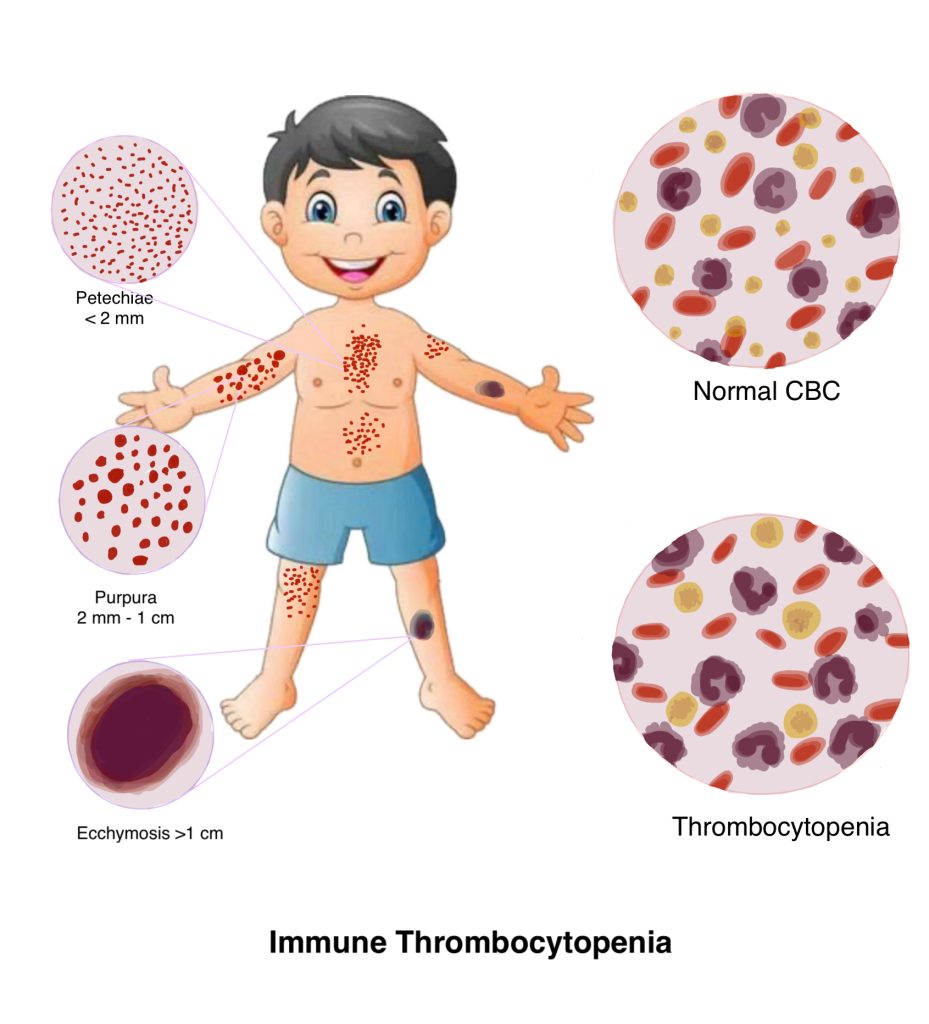
Causes of Immune Thrombocytopenia:
The exact cause of ITP is not always clear, but it is considered an autoimmune disorder. This means the immune system, which typically protects the body from infections, mistakenly targets and destroys platelets. Several factors can contribute to ITP, including:
Primary ITP: When the condition develops without any obvious underlying cause.
Secondary ITP: When ITP arises as a result of another health issue, such as:
Viral infections: Certain viral infections, like Epstein-Barr virus, HIV, or hepatitis, may trigger the immune system to attack platelets.
Autoimmune diseases: Conditions like lupus, rheumatoid arthritis, and other autoimmune disorders are linked to ITP.
Medications: Some drugs, such as certain antibiotics or blood thinners, can trigger ITP in certain individuals.
Pregnancy: In rare cases, ITP may develop during pregnancy, although platelet counts typically return to normal after delivery.
Symptoms:
The symptoms of ITP can vary, but the most common signs are related to bleeding and bruising due to low platelet counts:
Easy bruising: People with ITP may notice bruises forming easily, even with little or no trauma.
Petechiae: These are small, red or purple dots that appear on the skin, often due to bleeding under the surface.
Prolonged bleeding from cuts: Small cuts or scrapes may bleed for a longer time than usual.
Frequent nosebleeds or gum bleeding: These can occur because platelets are not available to help form clots.
Heavy or prolonged menstrual periods: Women with ITP might experience unusually heavy periods.
Fatigue: The reduced ability to form clots can sometimes lead to fatigue, as the body struggles to manage bleeding.
In severe cases, internal bleeding can occur, but this is less common.
Diagnosis:
To diagnose ITP, healthcare providers will typically start with a blood test to assess platelet levels:
Complete blood count (CBC): This test shows how many platelets are in the blood. A low platelet count is indicative of ITP.
Peripheral blood smear: A sample of the blood is examined under a microscope to look for any abnormalities in the platelets.
Bone marrow biopsy: This may be done to rule out other conditions that could cause low platelet counts, such as leukemia.
Tests to rule out other conditions: If secondary ITP is suspected, additional tests may be done to check for infections, autoimmune diseases, or other underlying causes.
Treatment:
The treatment plan for ITP varies depending on the severity of the condition and the platelet count:
Corticosteroids: Prednisone and other corticosteroids are often used as a first-line treatment to suppress the immune system and increase platelet production.
Intravenous immunoglobulin (IVIG): This therapy involves infusing a high dose of antibodies to help raise platelet counts quickly.
Platelet transfusions: In cases of severe bleeding or very low platelet counts, a transfusion of platelets may be needed to prevent bleeding complications.
Rituximab: This medication can help reduce the immune system’s attack on platelets, especially in chronic cases of ITP.
Splenectomy: If other treatments don’t work, removal of the spleen (which plays a role in platelet destruction) may be considered.
Thrombopoietin receptor agonists: Medications such as eltrombopag or romiplostim can stimulate the bone marrow to produce more platelets.
Prevention:
Since ITP is an autoimmune condition, there is no way to prevent it from developing. However, for those who already have ITP, managing the condition with the help of a healthcare provider is key. People with ITP should avoid activities that increase the risk of bleeding, such as contact sports, and be cautious with medications that can affect platelet function.

Take the first step towards hope and healing – book your appointment with Shashwat Hospitals today!
Shashwat Hospitals is a leading oncology hospital in the Saurashtra region, dedicated to providing comprehensive, compassionate, and patient-centric cancer care with a commitment to clinical excellence and innovation.