Skip to content
Home
About
About Us
Our Team
Testimonials
Achievements
Career
Blog
Our Reach
Treatment
Services
Cancer Types
Solid Malignancy
Hematological Disorder
Benign Hematology
Awareness
Awareness Event
CME
Camp On Site
Clinical Research
Contact Us
Home
About
About Us
Our Team
Testimonials
Achievements
Career
Blog
Our Reach
Treatment
Services
Cancer Types
Solid Malignancy
Hematological Disorder
Benign Hematology
Awareness
Awareness Event
CME
Camp On Site
Clinical Research
Contact Us
Schedule Appointments
Leukemia
Acute Leukemia:
Symptoms appear suddenly, over a few weeks to a month, and can be life-threatening.
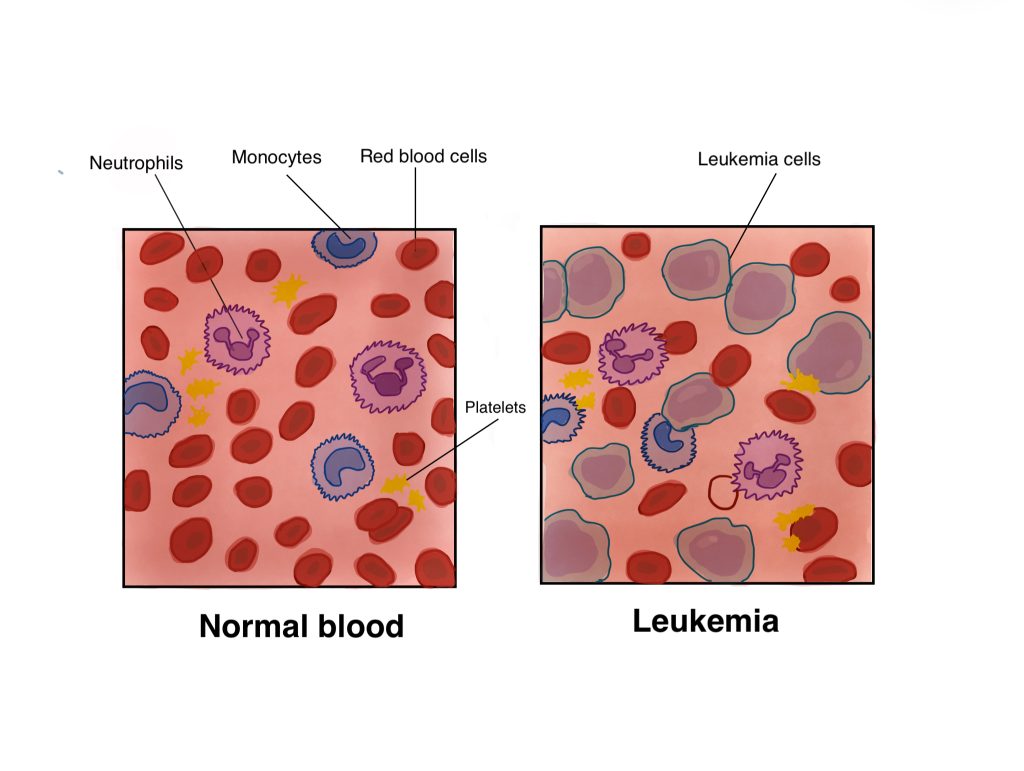
Malignant cells (called blasts) are immature and unable to function properly in the immune system.
Common types include Acute Myeloid Leukemia (AML) and Acute Lymphocytic Leukemia (ALL).
Chronic Leukemia:
Develops slowly over months or even years, often with no immediate life-threatening symptoms.
Abnormal cells are more mature but still not effective.
Common types include Chronic Lymphocytic Leukemia (CLL) and Chronic Myelogenous Leukemia (CML).
Risk Factors
Chemical exposure (e.g., pesticides, fertilizers)
Previous radiation therapy or chemotherapy
Genetic syndromes (e.g., Down syndrome, Fanconi anemia)
Family history of leukemia
Symptoms
Acute Leukemia:
Sudden symptoms like fatigue, bruising, frequent infections, fevers, night sweats, and unintentional weight loss.
Can cause organ damage, especially to the liver, spleen, and lymph nodes.
Chronic Leukemia:
Symptoms can develop gradually and might not show for years.
Includes weight loss, loss of appetite, and fatigue.
May be discovered during routine blood tests due to elevated white blood cell counts.
Diagnosis
Leukemia is diagnosed through a combination of:
Blood tests to look for abnormalities in cell counts.
Bone marrow biopsy to examine cell production.
Genetic tests and imaging scans to check for cell mutations or spread to organs.
Treatment
Chemotherapy: Standard treatment with combinations of drugs.
Targeted therapies: Newer treatments that focus on specific cancer cell molecules.
Bone marrow transplant: A treatment for advanced or relapsed cases