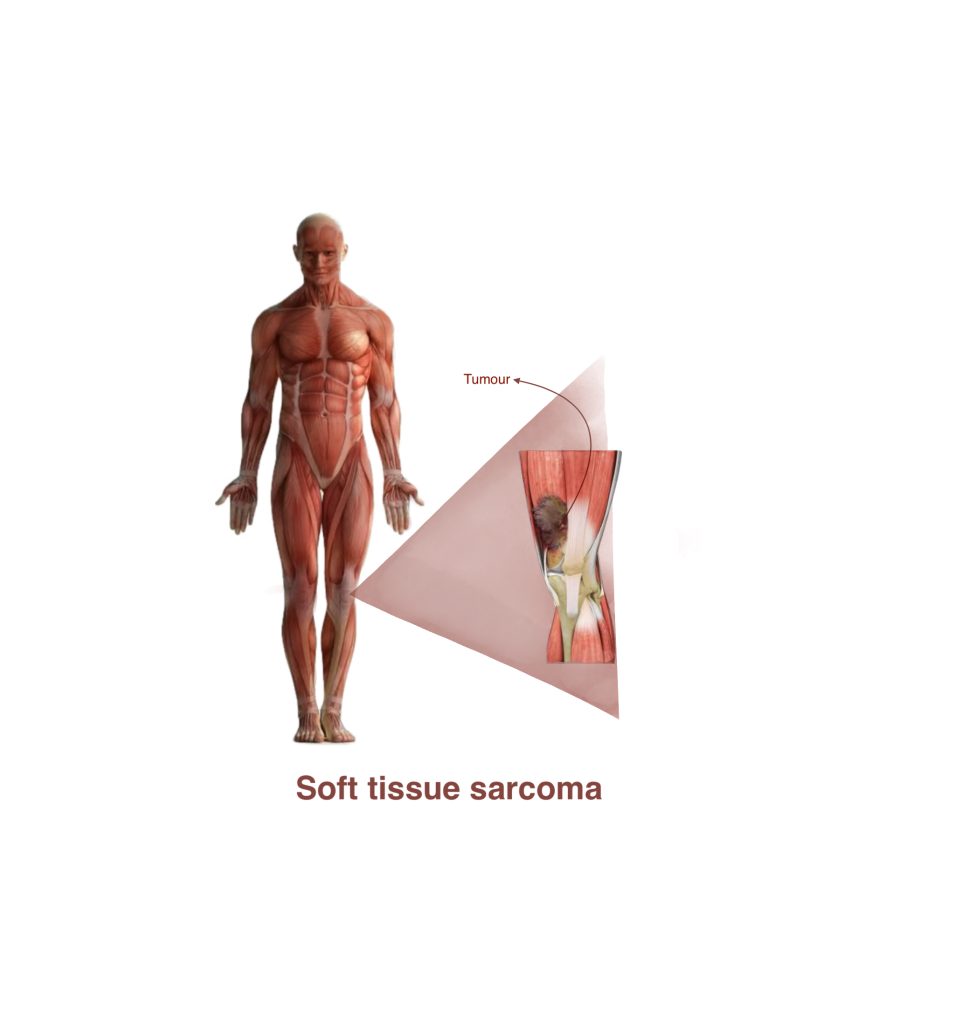
Certain factors may increase the risk of developing soft tissue sarcoma:
🔹 Genetic Conditions:
Li-Fraumeni Syndrome (TP53 mutation)
Neurofibromatosis Type 1 (von Recklinghausen disease) (NF1 mutation)
Gardner Syndrome (APC mutation)
Gorlin Syndrome (PTCH1 mutation)
Tuberous Sclerosis (Bourneville disease) (TSC1 or TSC2 mutation)
Werner Syndrome (adult progeria) (WRN mutation)
🔹 Other Risk Factors:
Past radiation therapy treatment
Long-term lymphedema (swelling in arms or legs)
Exposure to certain chemicals (Thorotrast, vinyl chloride, arsenic)
Infection with HIV or human herpesvirus 8 (linked to Kaposi sarcoma)
SYMPTOMS
Soft tissue sarcoma usually doesn’t cause symptoms in its early stages. Symptoms appear only when the tumor grows large enough to press against nearby structures. These may include:
🔹 A painless lump or swelling
🔹 Pain or discomfort (if the tumor presses on nerves or muscles)
🔹 Reduced mobility (if located near joints)
🔹 Unexplained weight loss (in advanced cases)
TYPES are :
🔹 Angiosarcoma – Cancer that develops in the lining of blood vessels.
🔹 Desmoid Tumors – Occurs in connective tissues that support organs.
🔹 Gastrointestinal Stromal Tumor (GIST) – Affects the digestive system, often found in the stomach or intestines.
🔹 Leiomyosarcoma – Affects smooth muscle tissue, which lines organs like the uterus, bladder, stomach, and blood vessels.
🔹 Liposarcoma – Begins in fatty tissues of the body.
🔹 Synovial Sarcoma – Commonly affects the arms and legs, but can develop anywhere in the body.
DIAGNOSIS
🖥️ Imaging Tests:
Ultrasound (USG)
CT Scan
PET-CT Scan
MRI
🔬 Biopsy & Laboratory Tests:
Tissue biopsy (to confirm cancer type)
Immunohistochemistry (IHC) (to identify specific cancer cells)
Molecular testing (to detect genetic mutations)
TREATMENT OPTIONS ARE :
🔹 Surgery – Primary treatment that removes the tumor.
🔹 Radiation Therapy – Uses high-energy beams to shrink tumors before surgery or destroy remaining cancer cells after surgery.
Stereotactic Body Radiation Therapy (SBRT)
Proton Therapy
🔹 Chemotherapy – Uses powerful drugs to kill cancer cells, especially if the sarcoma has spread.