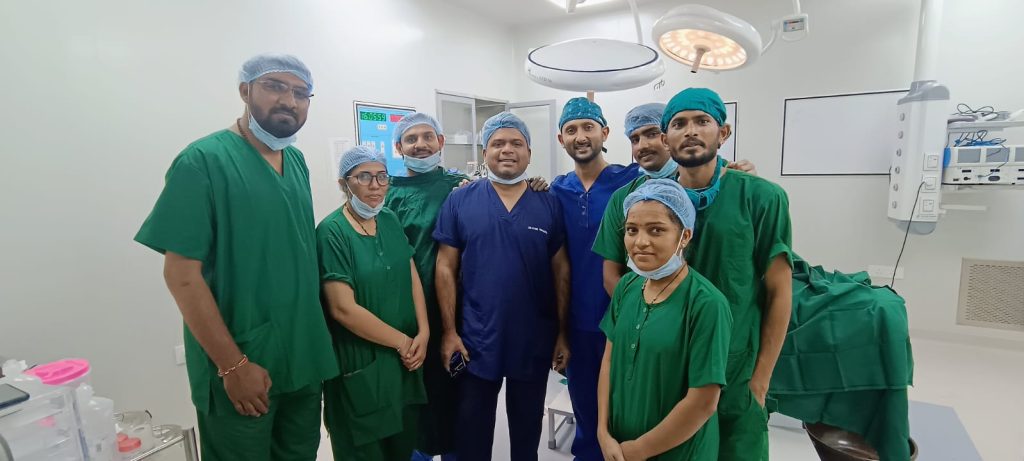
All types of Cancer surgery

1. Diagnostic Surgery

  • Biopsy: A small sample of tissue is removed for examination under a microscope. Types of biopsies include:
    • Needle Biopsy: Uses a needle to extract tissue or fluid.
    • Incisional Biopsy: Removes a part of the tumor.
    • Excisional Biopsy: Removes the entire tumor or abnormal area.

2. Curative Surgery

  • Performed with the intent to remove all cancerous tissue. It is most effective for localized cancers that have not spread.
  • Examples:
    • Lumpectomy: Removal of a tumor from the breast while preserving as much normal breast tissue as possible.
    • Mastectomy: Removal of one or both breasts, partially or completely.
    • Prostatectomy: Removal of the prostate gland.

3. Preventive (Prophylactic) Surgery

  • Performed to remove tissue that does not yet contain cancer cells but is likely to develop into cancer.
  • Examples:
    • Prophylactic Mastectomy: Removal of one or both breasts to reduce the risk of breast cancer.
    • Prophylactic Oophorectomy: Removal of the ovaries to reduce the risk of ovarian cancer.

4. Debulking Surgery

  • Removes as much of the tumor as possible when complete removal is not feasible. This is often followed by other treatments such as chemotherapy or radiation.
  • Example: Surgery for advanced ovarian cancer where the tumor cannot be completely removed.

5. Palliative Surgery

  • Aims to relieve symptoms and improve quality of life rather than cure the disease. It can help manage pain, bleeding, or other cancer-related complications.
  • Example: Surgery to remove a tumor causing obstruction in the bowel.

6. Reconstructive (Plastic) Surgery

  • Performed to restore appearance or function after cancer surgery.
  • Examples:
    • Breast Reconstruction: After a mastectomy.
    • Reconstructive Surgery of Head and Neck: After removal of tumors affecting these areas.

7. Minimally Invasive Surgery

  • Techniques that use smaller incisions compared to traditional surgery, often resulting in quicker recovery times and fewer complications.
  • Examples:
    • Laparoscopic Surgery: Uses a laparoscope (a thin, lighted tube) to perform surgeries through small incisions.
    • Robotic Surgery: Uses robotic systems to perform precise and controlled movements during surgery.

8. Cryosurgery

  • Uses extreme cold to destroy cancer cells. It is often used for early-stage skin cancers and precancerous conditions.
  • Example: Treatment of early-stage prostate cancer.

9. Laser Surgery

  • Uses focused light beams to cut tissue or remove surface tumors. It is often used for cancers of the cervix, larynx, liver, lung, rectum, and skin.

10. Endoscopic Surgery

  • Uses an endoscope (a thin, flexible tube with a light and camera) to perform surgery. It allows for visualization and treatment of tumors within body cavities.
  • Example: Colonoscopy for removing polyps from the colon.

11. Sentinel Lymph Node Biopsy

  • Involves the removal of the sentinel lymph nodes (the first few lymph nodes into which a tumor drains) to check for the spread of cancer.

12. Mohs Surgery

  • A precise surgical technique used to treat skin cancer. Layers of cancer-containing skin are progressively removed and examined until only cancer-free tissue remains.

Conclusion

Onco surgery is tailored to each patient’s specific type and stage of cancer. At Shashwat Hemato-Onco Associates, our experienced surgical oncologists utilize the latest techniques and technologies to provide the most effective surgical care. We are dedicated to achieving the best possible outcomes for our patients, whether through curative, palliative, or reconstructive surgery.