
Introduction
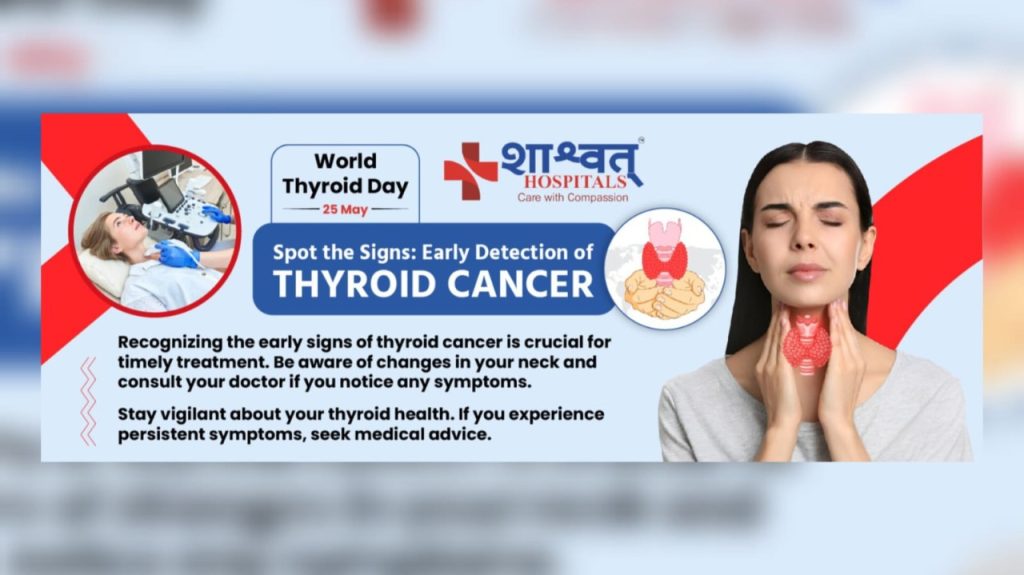
- Every year on May 25th, World Thyroid Day raises global awareness about thyroid diseases, promotes understanding of thyroid health, and encourages proactive care. This observance also honors the work of medical professionals and researchers dedicated to improving outcomes for those affected by thyroid conditions.
What Is the Thyroid ?
- The thyroid typically weighs between 20 and 60 grams. It is surrounded by two fibrous capsules. The outer capsule is connected to the voice box muscles and many important blood vessels and nerves. There is loose connective tissue between the inner and the outer capsule, so the thyroid can move and change its position when we swallow.
- The thyroid tissue consists of many individual lobules that are each enclosed in a thin layer of connective tissue. These lobules contain a great number of small sacs – called follicles – which store thyroid hormones in the form of little droplets.
What hormones does the thyroid make ?
- The thyroid gland produces three hormones:
- Triiodothyronine (T3)
- Tetraiodothyronine (T4), also called thyroxine
- Calcitonin
- Only T3 and T4 are considered proper thyroid hormones. Calcitonin is made by C-cells. It is involved in calcium and bone metabolism. Iodine is an important substance that is needed to make the thyroid hormones T3 and T4. Our bodies can’t produce this trace element, so we need to get enough of it in our diet. Iodine is absorbed into our bloodstream from food in our bowel. It is then carried to the thyroid gland, where it is used to make thyroid hormones.
How do the thyroid hormones work ?
- The more active T3 and T4 become in the body, the more the basal metabolic rate goes up (the amount of energy your body needs while at rest). They make all of the cells in the body work harder. This has the following effects, for example:
- Body temperature rises
- The heart beat becomes stronger and the pulse faster
- Food is used up more quickly because energy stored in the liver and muscles is broken down
- The brain matures (in children)
- Growth is promoted (in children)
- Activation of the nervous system leads to higher levels of attention and quicker reflexes.
Laboratory tests to assess thyroid function
- Serum TSH concentration
- Serum total T4 and T3 concentrations
- Serum free T4 and T3 concentrations
Overview of Thyroid Malignancy
What is Thyroid Cancer ?
- This is when normal cells in the thyroid change into abnormal cells and grow out of control. The thyroid is a gland in the middle of the neck. The thyroid gland makes thyroid hormone. There are different types of thyroid cancer. Some types are more serious than others.
What are the symptoms of thyroid cancer?
- People might not notice any symptoms at first. They might find out that they have thyroid cancer after their doctor does an imaging test of their neck for another reason. Imaging tests create pictures of the inside of the body.
- When thyroid cancer causes symptoms, the most common is a growth (called a “nodule”) on the thyroid gland. This growth might get bigger in a short amount of time, or it might grow more slowly. In some cases, people see or feel the growth themselves. In other cases, their doctor or nurse feels the growth during a routine exam.
- Other symptoms of thyroid cancer can include:
- Hoarseness or being unable to talk
- Trouble breathing
- Trouble swallowing
- Cough or coughing up blood
Test For Thyroid Cancer
- Imaging tests – The test most often done is an ultrasound, which uses sound waves to create pictures of the thyroid. Some people also have a thyroid scan.
- Blood tests – TSH, Thyroglobulin level, Antithyroglobulin antibodies, S. Calcitonin and other genetic and molecular testing is used.
- Fine-needle aspiration Cytology / Biopsy
Types of Thyroid Cancer:
- Papillary – Most common and highly treatable A variant of follicular cancer, tends to be more aggressive and less responsive to radioactive iodine
- Follicular – Often slow-growing
- Medullary – Neuroendocrine tumor of the parafollicular or C cells of the thyroid gland. It can be hereditary
- Anaplastic (Undifferentiated)– Rare and more aggressive and arises from differentiated cancers
- Oncocytic (Hurthle cell) – A variant of follicular cancer, tends to be more aggressive and less responsive to radioactive iodine.
Each type requires a tailored treatment plan—early detection leads to better outcomes.
What is cancer staging?
- This is a way in which doctors find out if a cancer has spread past the layer of tissue where it began, and, if so, how far.
- The right treatment for you depends a lot on the type of thyroid cancer you have, its stage, and your other medical problems.
Treatment Options in Thyroid Cancer
- Surgery – Thyroid cancer is usually treated with surgery to remove the cancer. Your doctor will remove part or all of your thyroid gland. They might also remove nearby lymph nodes, which are bean-shaped organs that are part of the body’s infection-fighting system.
- Radioiodine – This comes as a pill or a liquid you swallow. It has a small amount of radiation and can destroy much of the thyroid gland. Your doctor will decide if you should get radioiodine after seeing the results of your surgery. Do not use radioiodine if you are pregnant or breastfeeding.
- Thyroid hormone – Your doctor will prescribe thyroid hormone medicines after surgery or radioiodine treatment. That way, your body will have the correct amount of thyroid hormone.
- Other treatments that are sometimes used include:
- External-beam radiation therapy – This uses high doses of X-rays, called radiation, to kill cancer cells. The radiation comes from a machine that is outside of the body.
- Chemotherapy – Chemotherapy is not the first-line treatment for most types of thyroid cancer but may be used in certain advanced or aggressive cases. Cisplatin , Doxorubicin, Paclitaxel , Carboplatin is usually prefered regimen.
- Targeted therapy – Used in RAI-refractory differentiated thyroid cancer (DTC) and medullary thyroid cancer (MTC). Lenvatinib , Sorafenib ,Vandetanib, Cabozantinib (in MTC)
At Shashwat Hospital , we provide:
- Early diagnosis with ultrasound, FNAC, and lab tests
- Advanced treatments plans : surgery, radioactive iodine, targeted and hormone therapy
- Multidisciplinary care by expert oncologists
- Personalized plans for all thyroid cancer types
- Genetic counseling and risk assessment
- E-clinic services for remote consults and follow-ups
